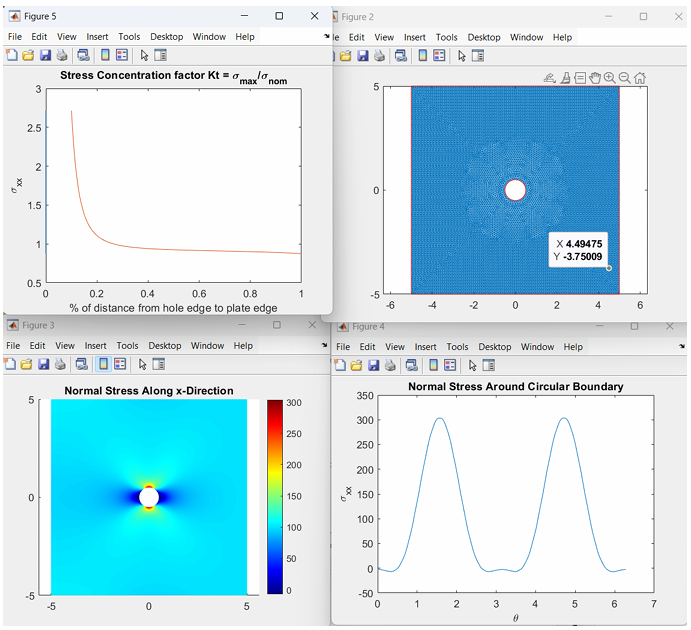
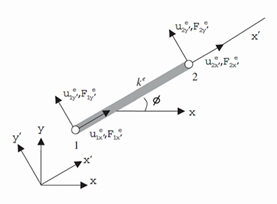
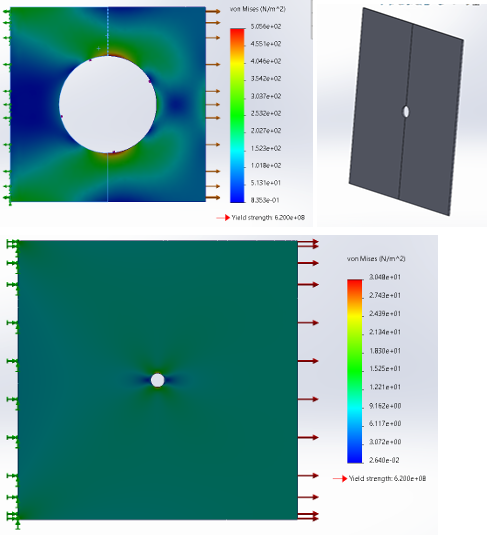
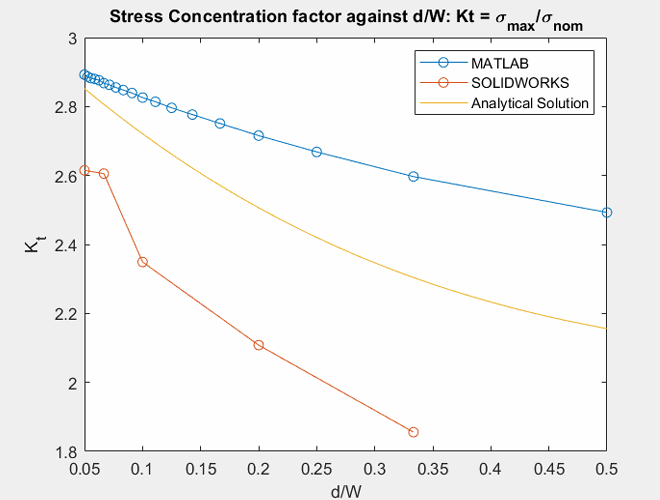
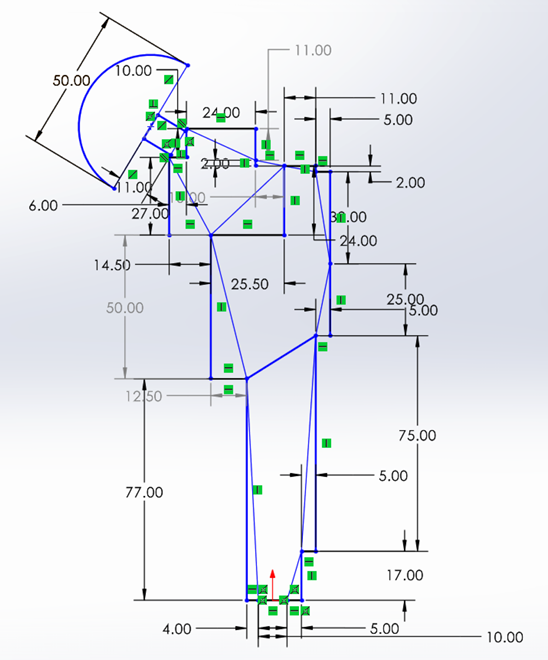
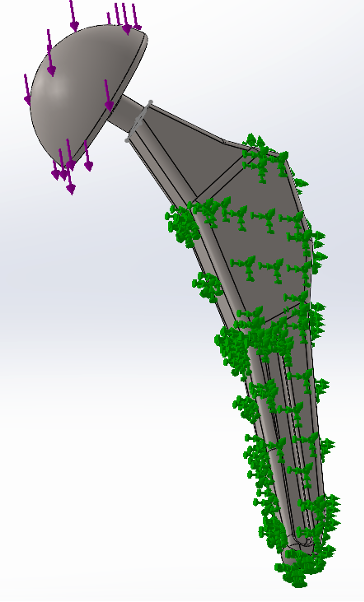
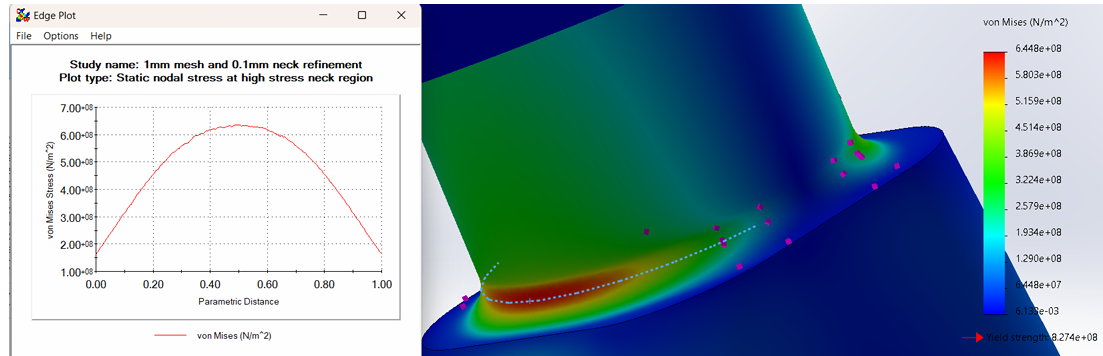
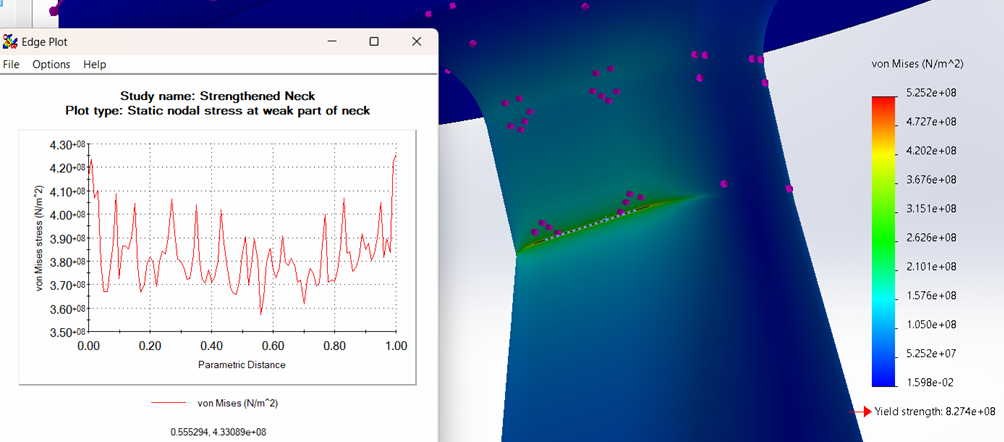
A finite-element study spanning hand-derived stiffness formulation, MATLAB PDE solvers, and CAD-based simulation — validating each result across analytical, numerical, and commercial-solver methods. Work covers 2D truss FEM from first principles, Kirsch hole stress-concentration verification, and a full design–analyse–optimise loop on a prosthetic hip implant, emphasising mesh convergence and physically-grounded boundary conditions over black-box solver output.
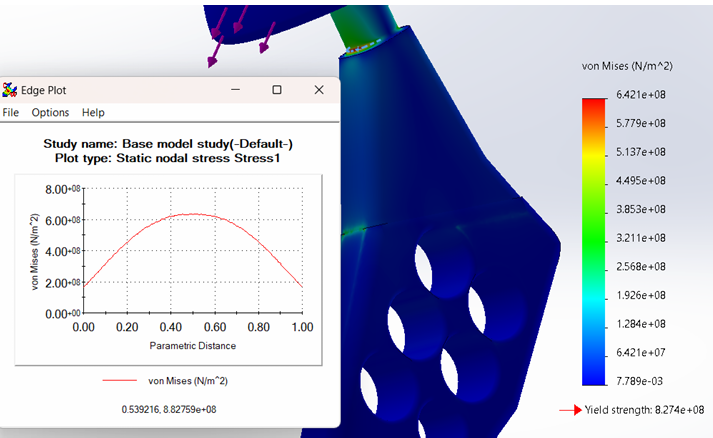
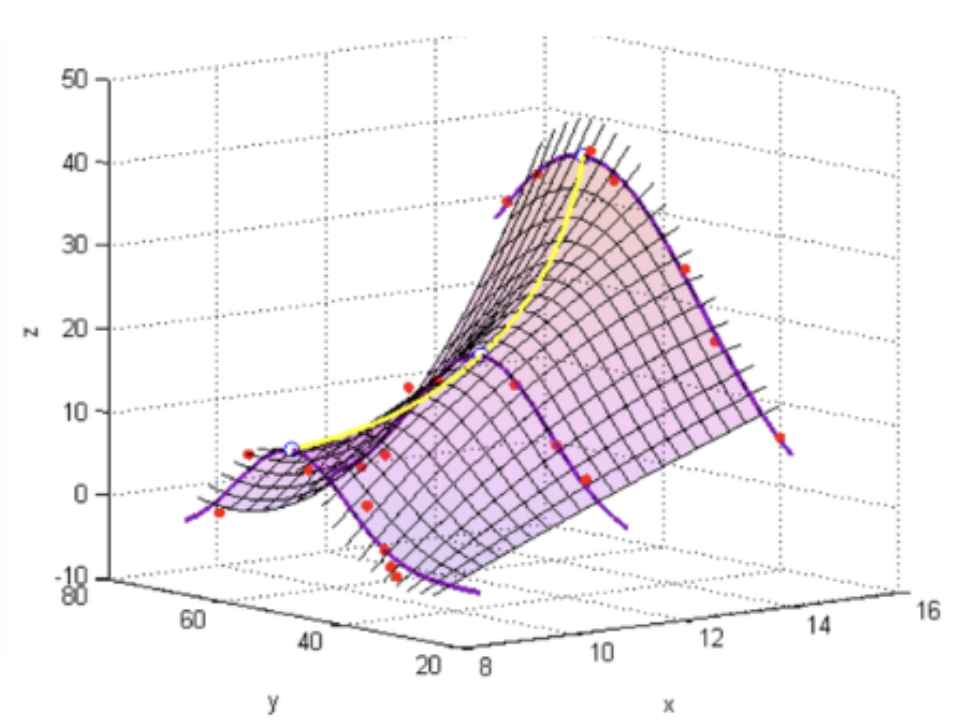
A personal multi-purpose numerical toolkit built so root-finders, integrators, and interpolation routines don’t get reimplemented from scratch on every project that needs them. Covers root-finding, a generalised Runge-Kutta family for IVP/BVP integration, interpolation, quadrature, and numerical differentiation — most built with configurable tolerances, selectable method variants, explicit convergence criteria, and memory choices made on purpose rather than left to defaults. Applied across dynamic-system modelling, field-computation contexts, and simulation post-processing.
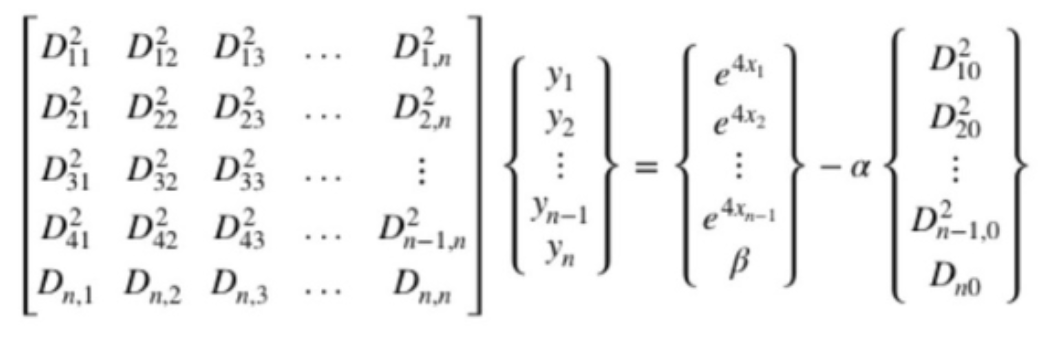
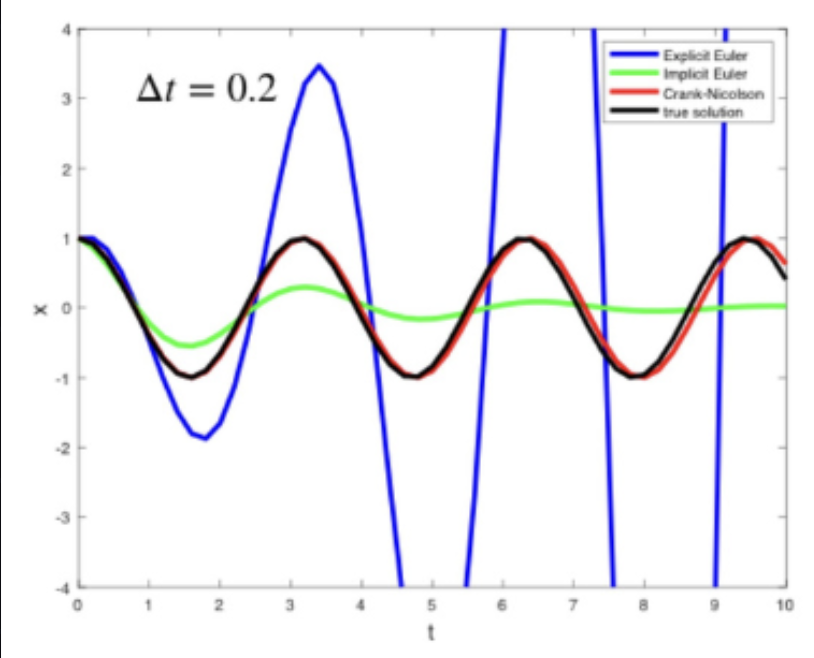
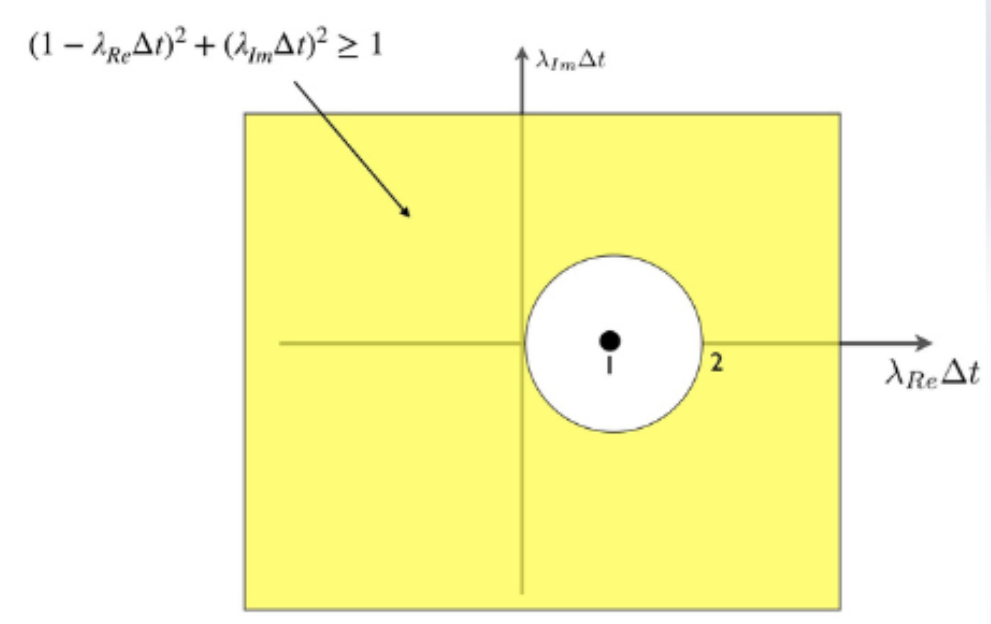
A deliberate implementation track through the core algorithm families behind engineering computation — hashing, sorting, graph traversal, shortest-path, and dynamic programming — building each from scratch to understand its mechanics rather than calling it from a library. The through-line is complexity: how time and memory behaviour is constructed theoretically, and how data-structure choice ends up shaping application performance. Each implementation was benchmarked empirically against its theoretical predictions.