Numerical Methods & Scientific Computing
Custom Numerical Methods & Solver Library — Root-Finding, Adaptive ODE Integration & Scientific Computing Toolkit
A personal multi-purpose numerical toolkit, built once so root-finders, integrators, and interpolation routines don’t get reimplemented from scratch on every project that needs them. The library covers root-finding methods, a generalised Runge-Kutta family for IVP/BVP integration, interpolation routines, quadrature, and numerical differentiation — most of it built with configurable tolerances, selectable method variants, explicit convergence criteria, structured input validation, and data-structure and memory choices made on purpose rather than left to defaults.
MATLAB · Python · C++ (structured, parameterised numerical implementations)
Numerical Methods & Software Engineering
- Implemented classical root-finding (bisection, Newton–Raphson, secant) with configurable tolerance and iteration-cap convergence criteria, plus input validation for bracket failure and ill-conditioning.
- Built the Runge-Kutta family around a generic Butcher-tableau stepper (c, A, b coefficients), so explicit Euler, Heun/RK2, and classical RK4 all instantiate the same core routine instead of being hand-coded separately — adding a new scheme means adding a coefficient table, nothing else.
- Added embedded adaptive step-size control (higher/lower-order pairs, RK45-style): estimated local truncation error from the two embedded solutions per step, applied a safety-factored step-update rule, and rejected and retried steps that exceeded tolerance.
- Checked each scheme’s convergence order empirically against its theoretical order by halving step size and confirming the error ratio scaled correctly (roughly 2p for a pth-order method) — the kind of test that catches bugs a single test case won’t, such as an order-4 method quietly behaving like order-3 because a stage weight is off.
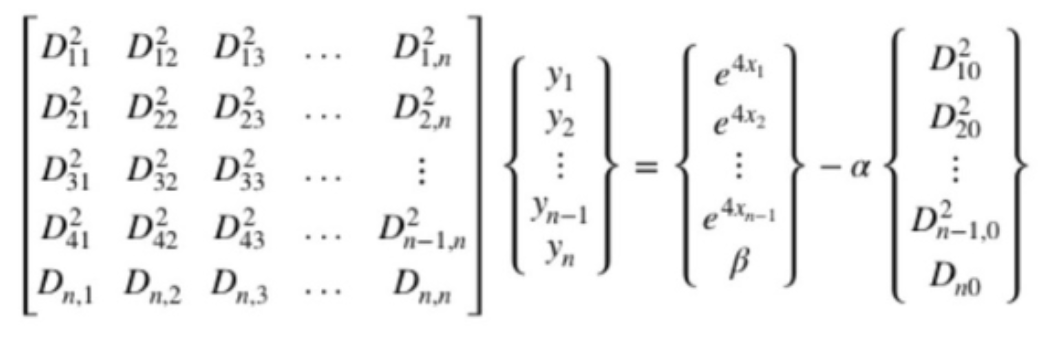
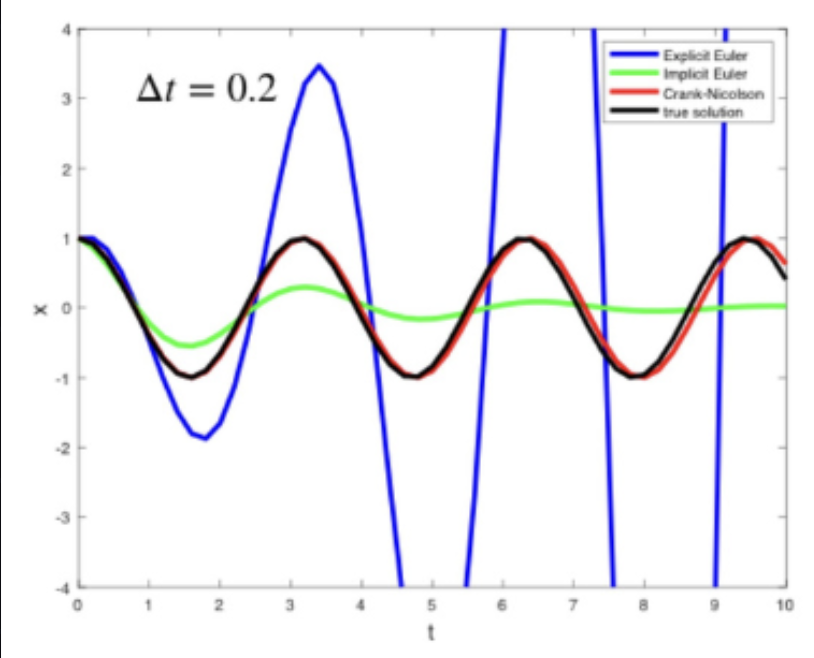
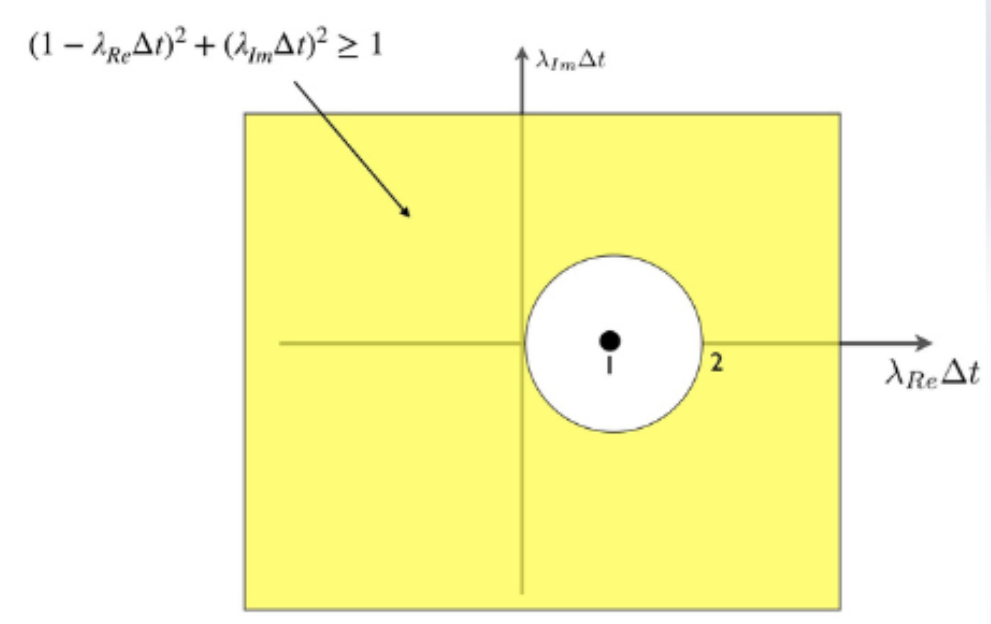
- Ran into stiffness directly: explicit RK’s bounded stability region forced impractically small steps on stiff test systems, which drove adding an implicit option (backward Euler / implicit trapezoidal), solving per-step nonlinear stage equations with the library’s own Newton–Raphson root-finder.
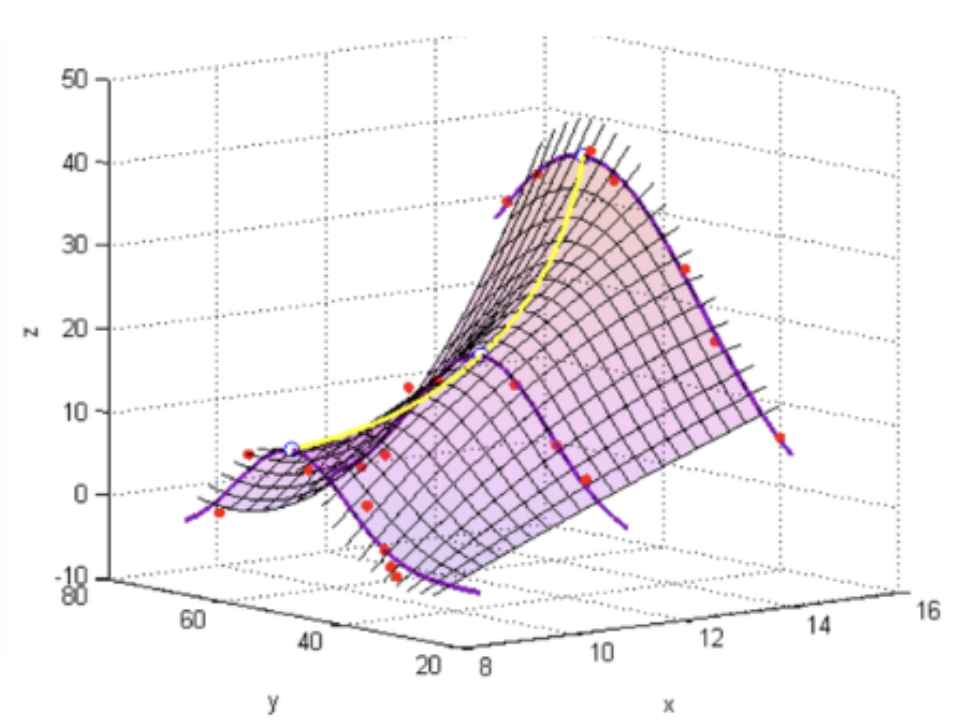
- Handled vector-valued state (systems of ODEs) the same way as the scalar case, and built dense output between accepted steps using the library’s own interpolation routines instead of a separate code path.
Applied Across
- Dynamic system & control-loop modelling: the RK stepper drove motor/inertia ramp-sizing and closed-loop thermal-control logic through a full ramp/steady/dwell duty cycle on a compound-drivetrain electromechanical system, where step-size and stiffness sensitivity affected which solver variant made sense.
- Finite-element & field-computation contexts: supported flux/potential quadrature and piecewise field-solution work across canonical electromagnetic geometries, checked against closed-form and commercial-solver results.
- Simulation post-processing: general-purpose interpolation, differentiation, and convergence-checking utilities reused across bench and simulation datasets instead of rebuilt per project.