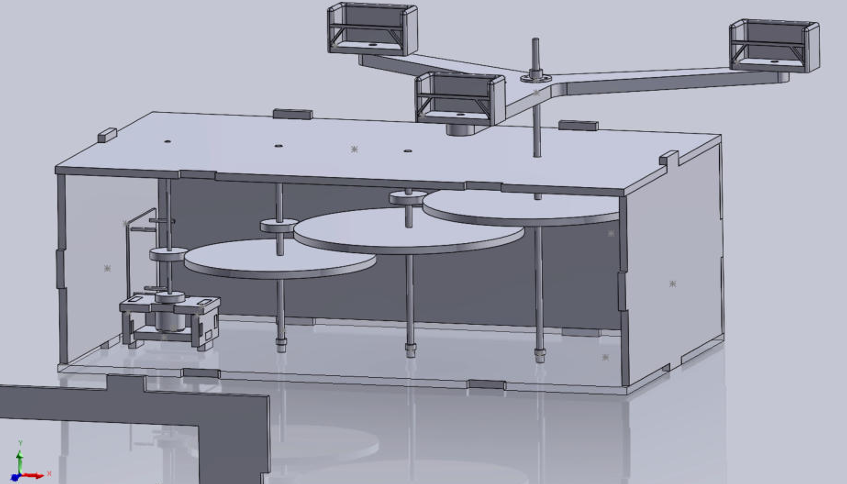
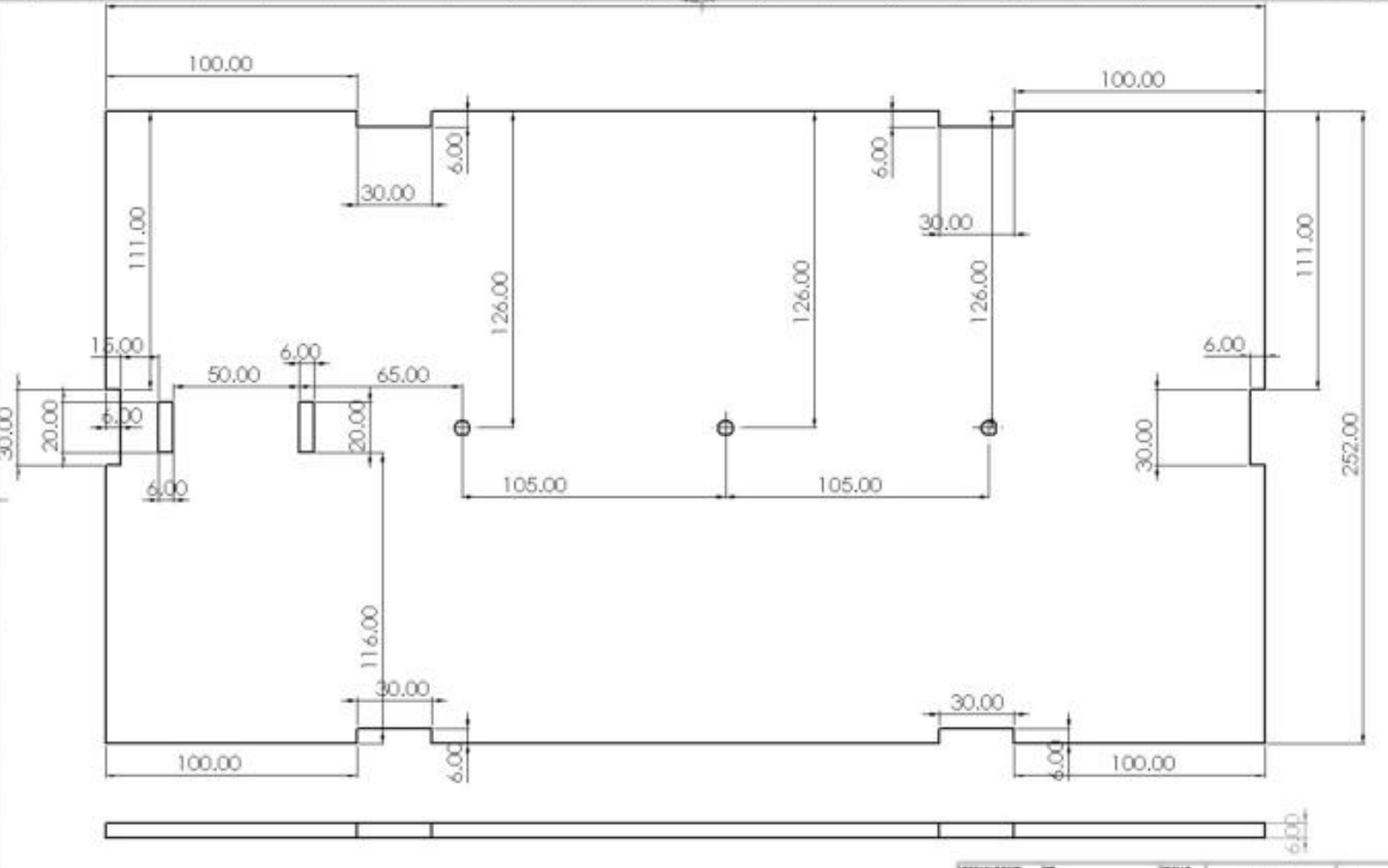
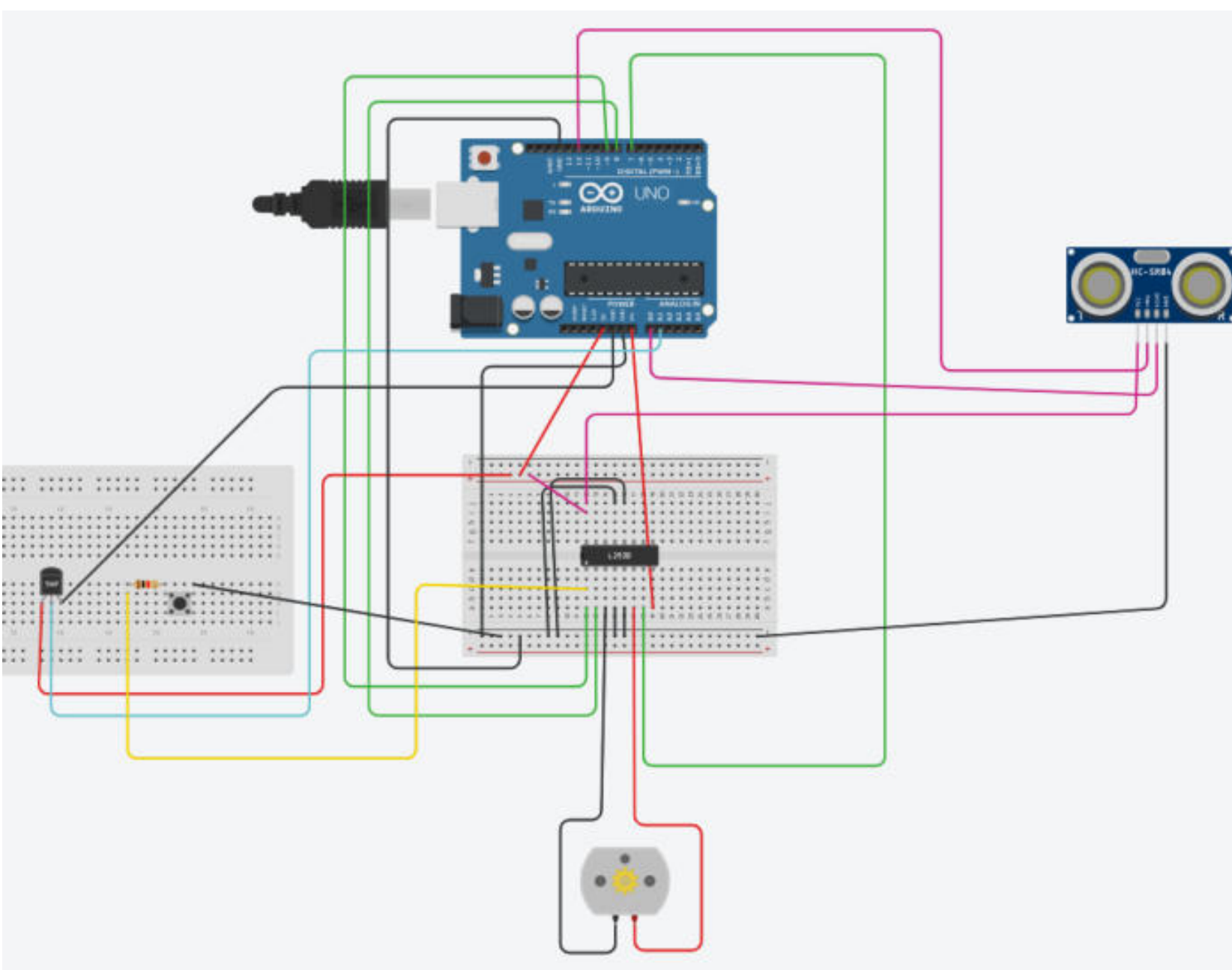
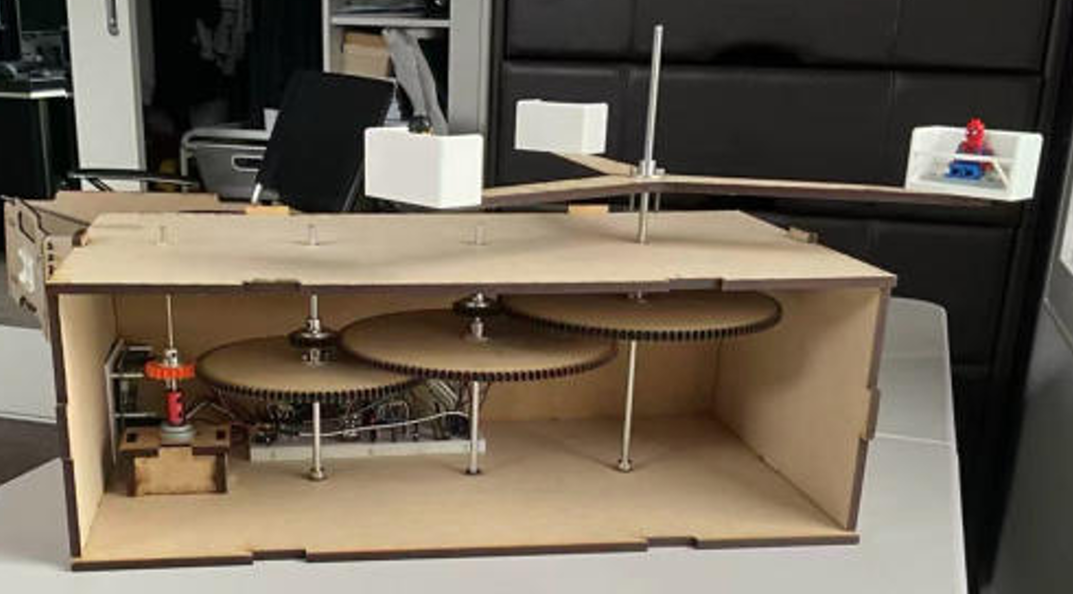
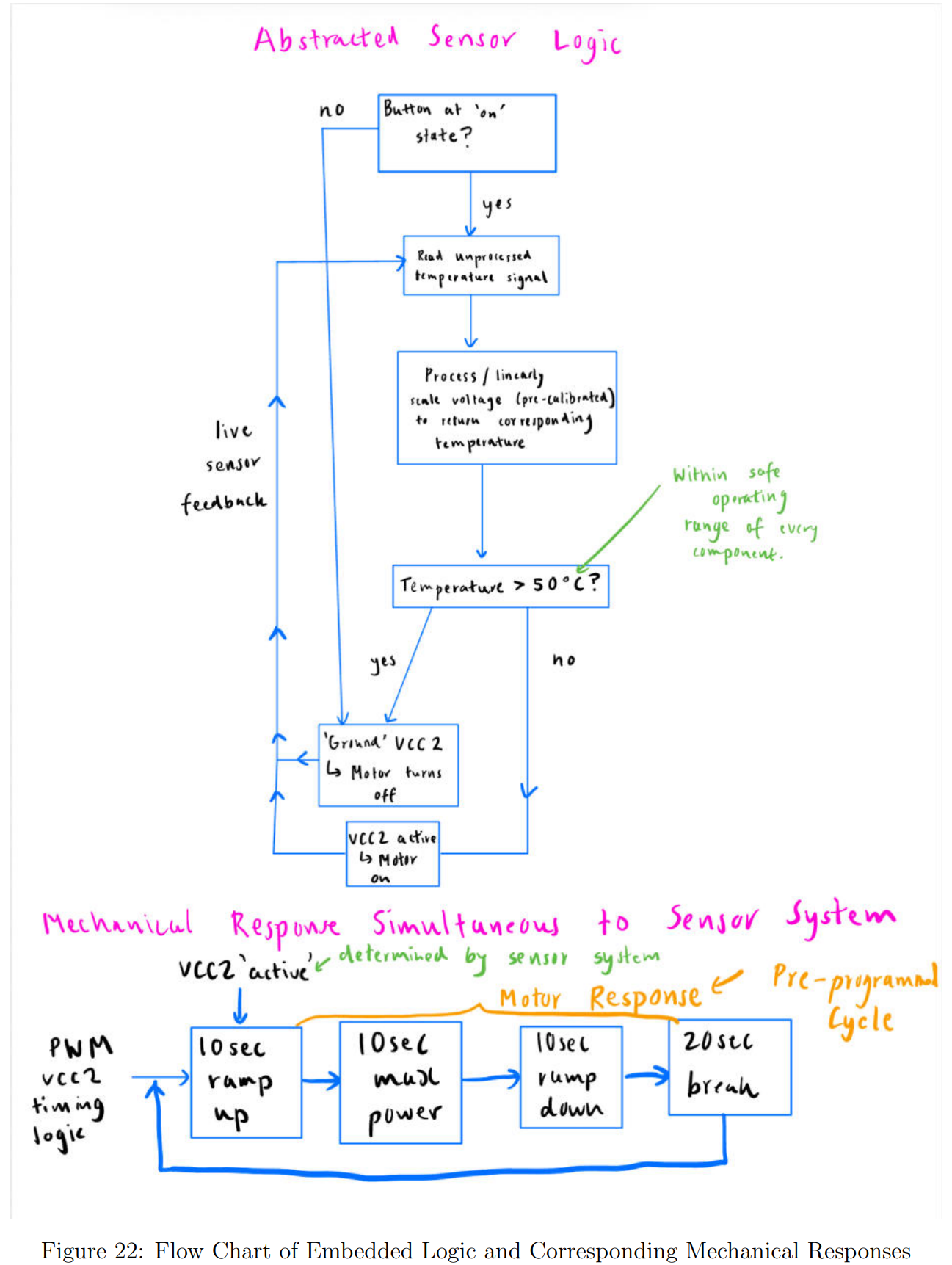
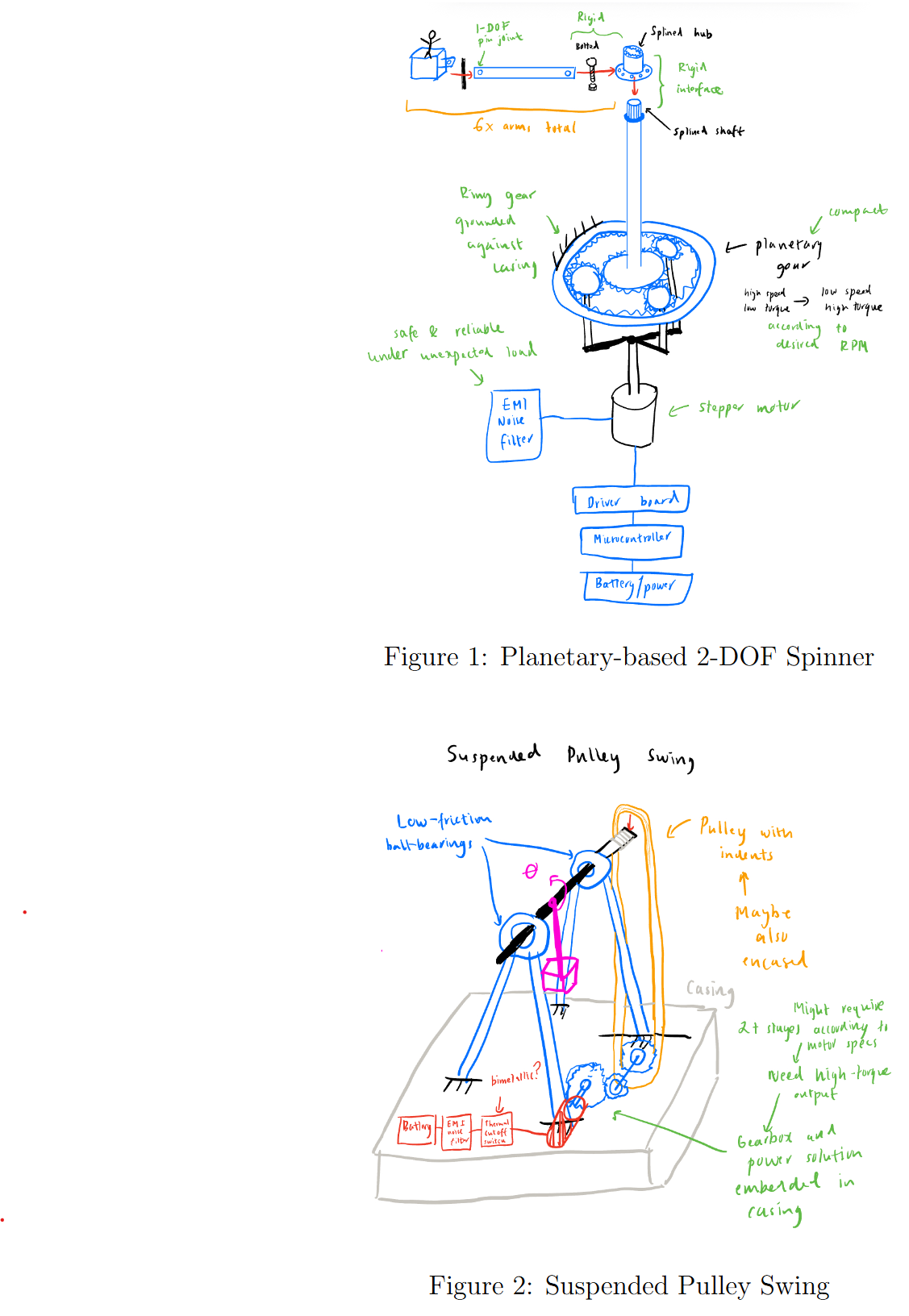
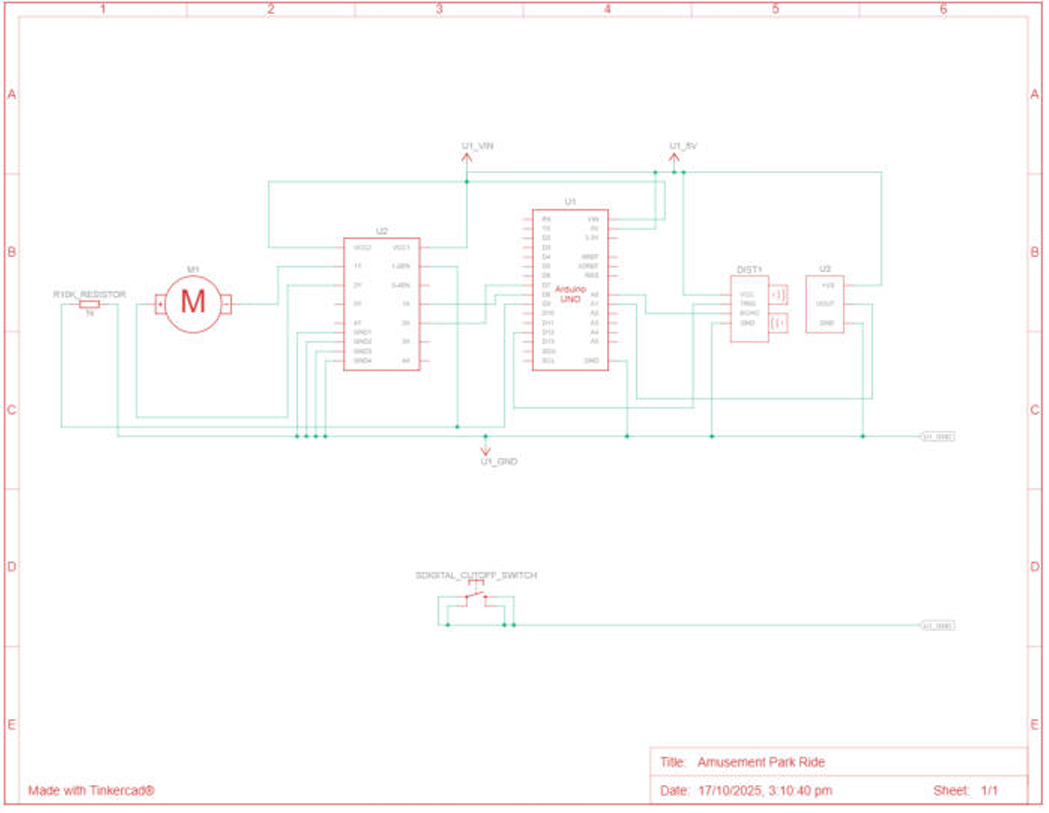
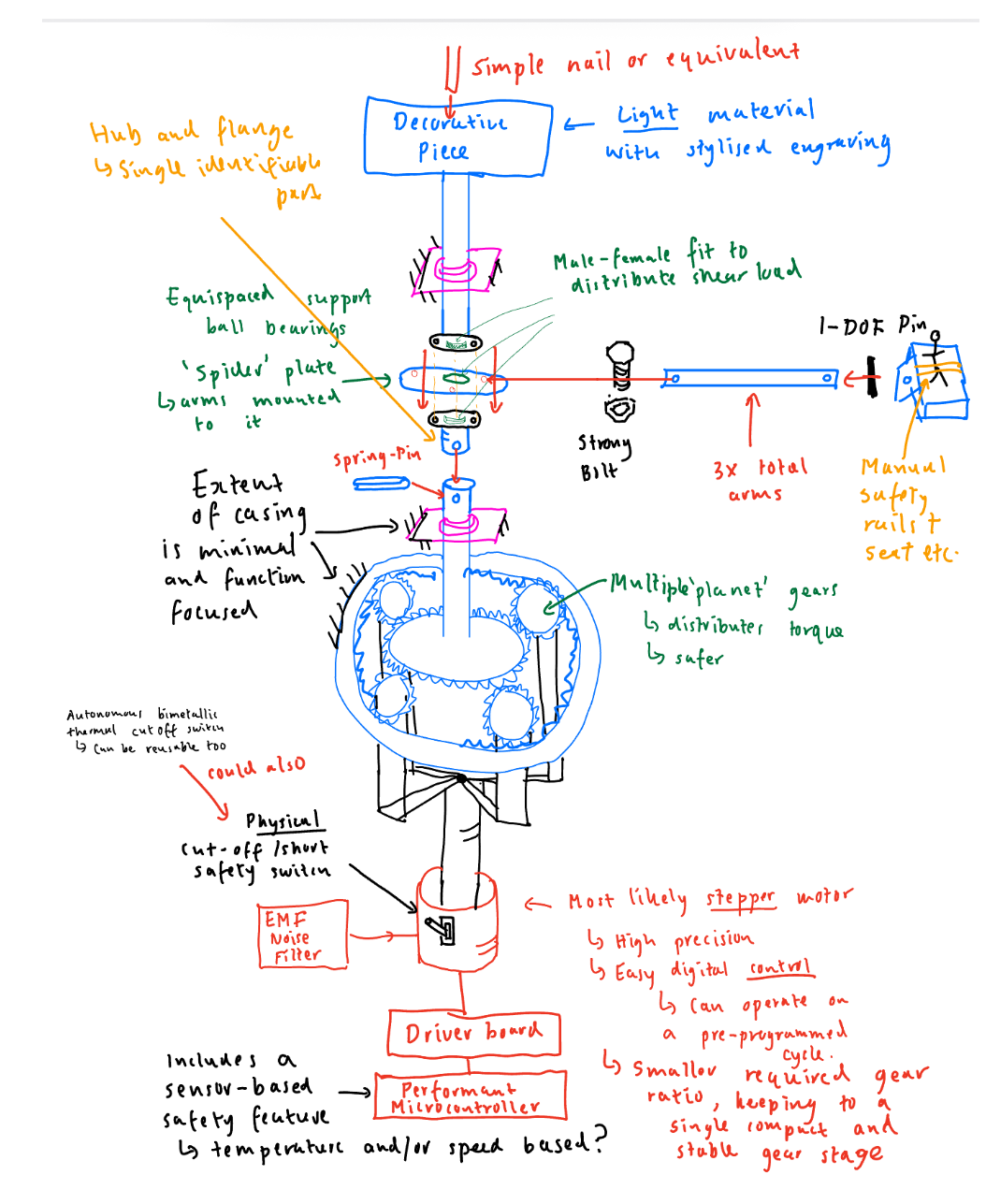
A scaled semi-autonomous amusement ride: a 6000 rpm DC motor stepped to 33.3 rpm through a three-stage compound spur reduction (5:1 × 6:1 × 6:1 = 180:1), driving three arms through a pre-programmed ride cycle with dual independent safety interlocks. Concept selected by weighted Pugh trade-study, then reversed mid-project on A/B test evidence — the prototyped stepper/planetary architecture was replaced with a DC compound drivetrain when measured motion quality, vibration, and power draw failed the design intent.
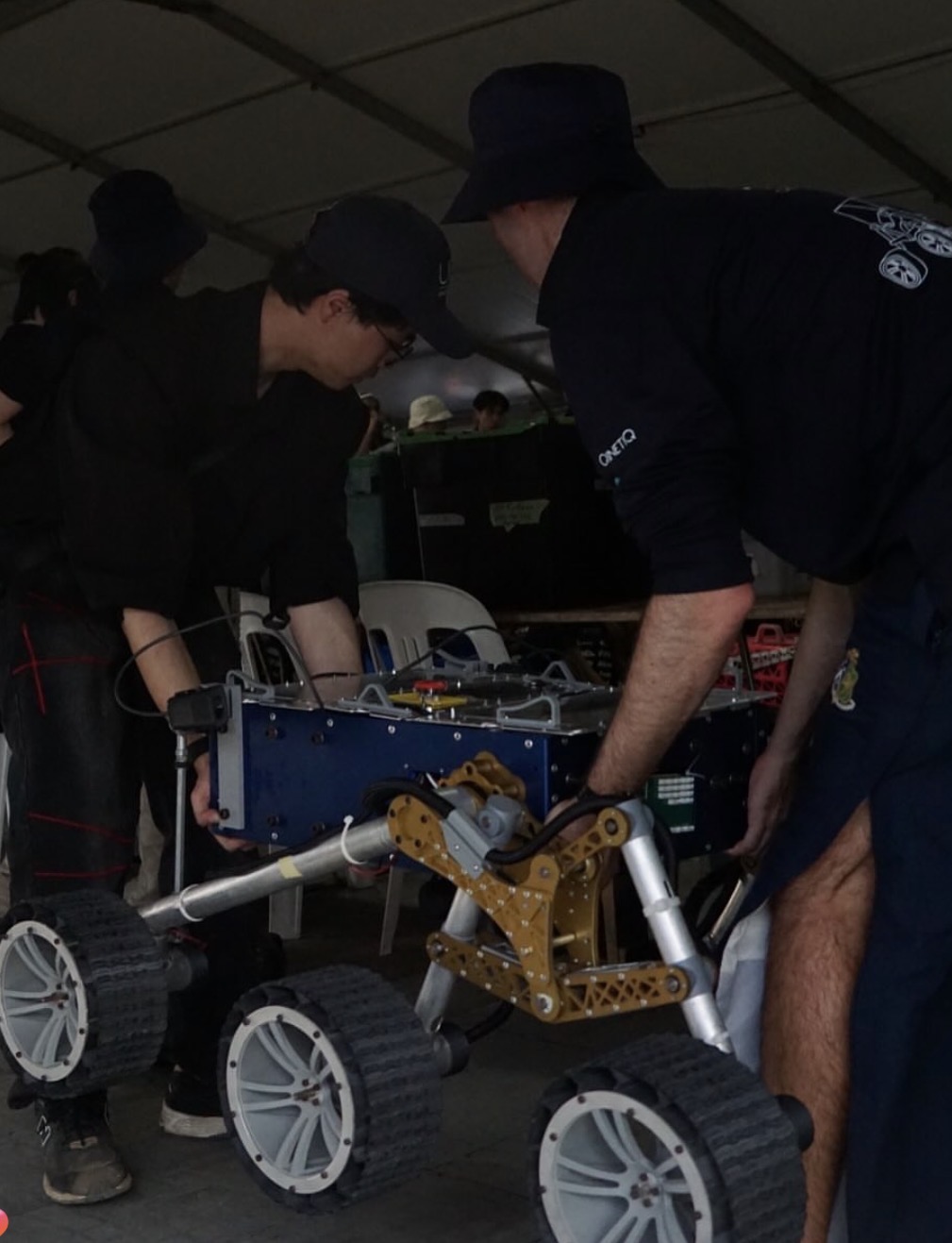
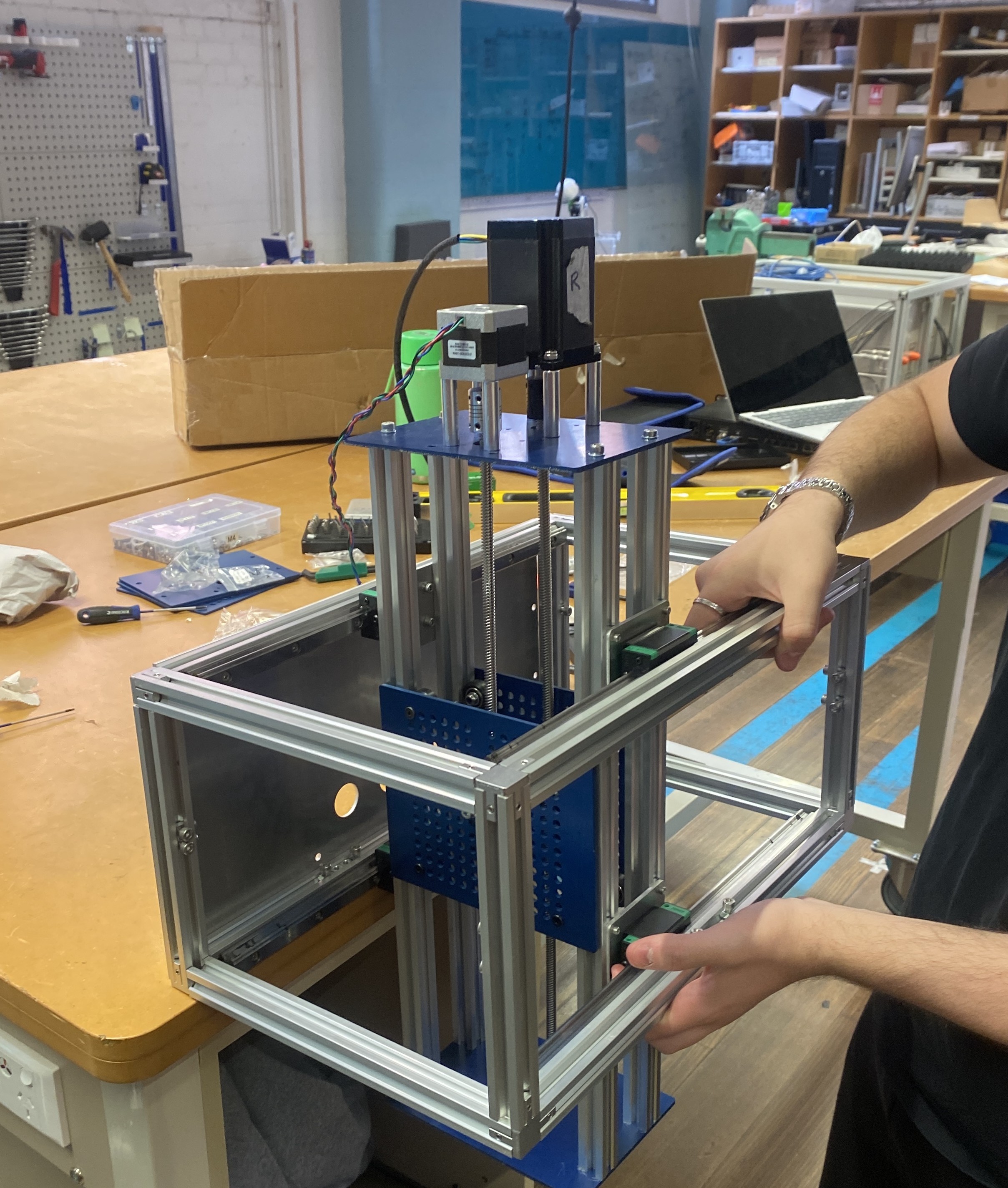
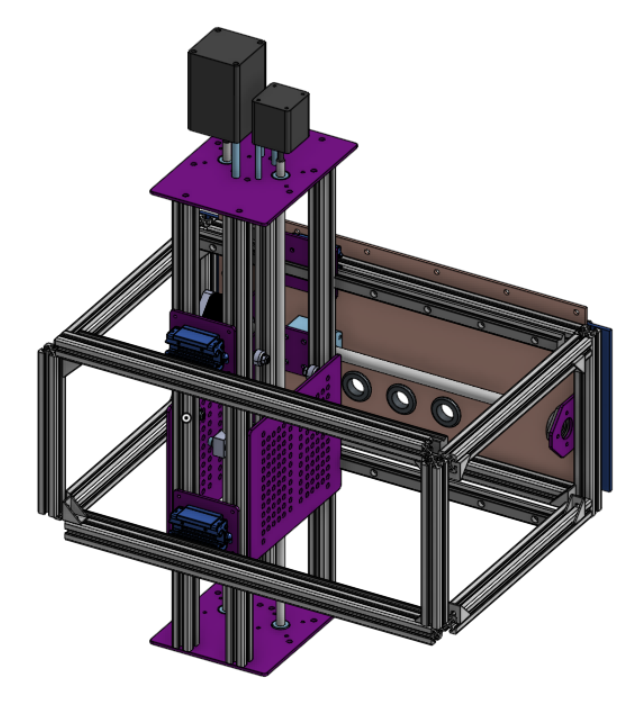
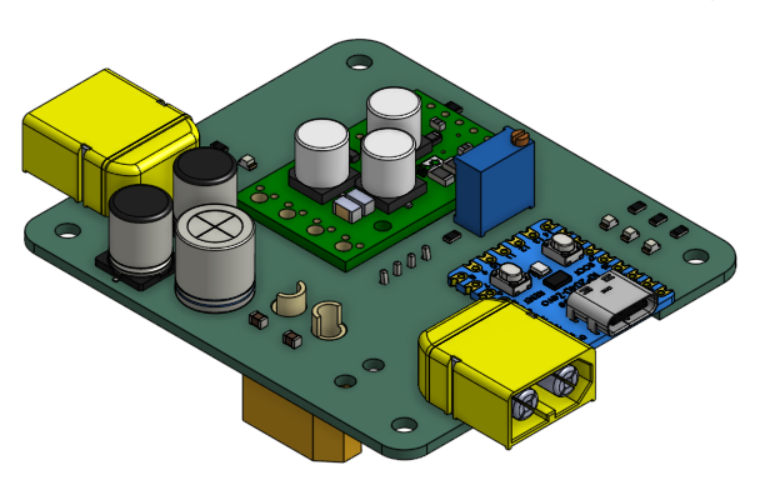
Co-developed the science-payload motion and integration hardware for a planetary-analogue rover: a precision gantry providing stable linear translation and repeatable positioning for a spectrometer, focused imaging module, and regolith-preparation brush and drill. Engineered through the late-design and manufacturing stages of the 2025–26 development cycle, under strict mass, volume, and competition-rule constraints — where positioning repeatability and vibration isolation directly bound measurement quality for in-situ resource analysis.